Water at home
Best Water Softener System: 7 Choices for Your Home
The short answer
I recommend the Whirlpool WHES40 for a compact setup within its rated flow. Compare separate-tank systems for other needs, or FutureSoft for salt-free scale control.
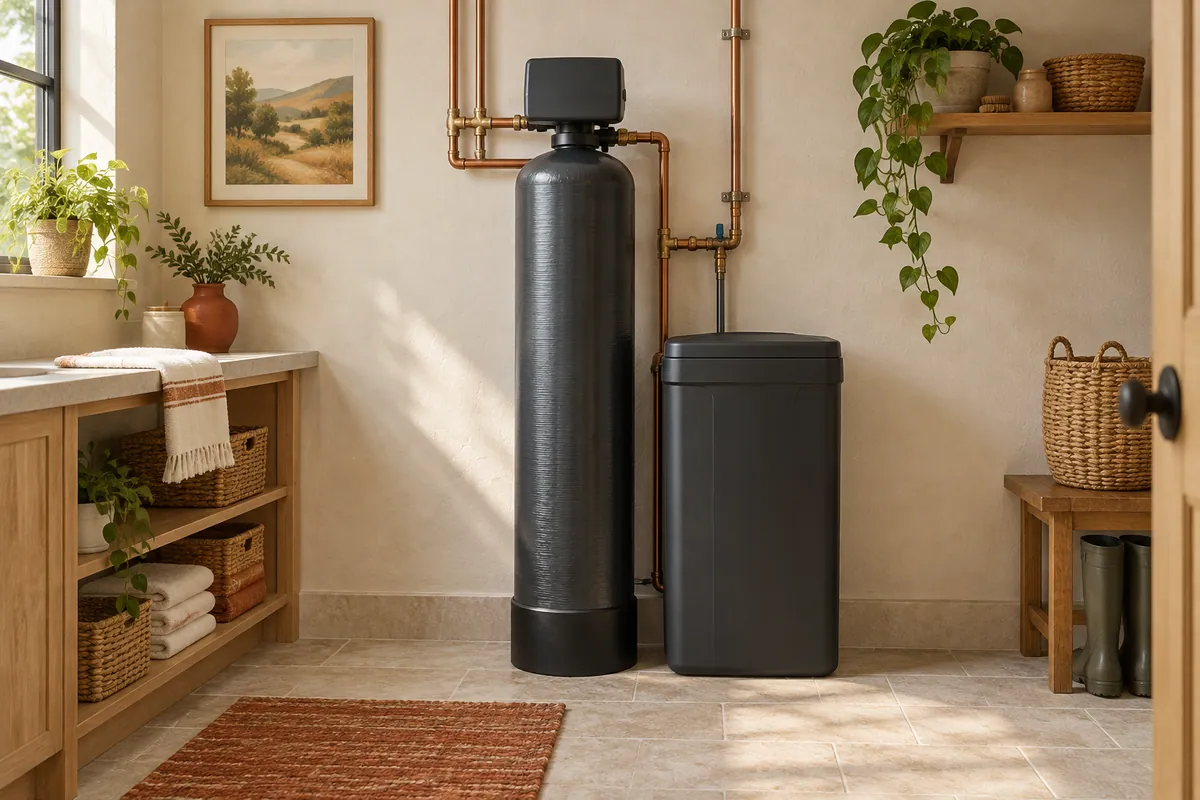
The best water softener system starts with a water test. A bathroom count is not enough. The unit must handle the hardness coming in. It must also keep up when several taps run at once. A big grain number cannot answer both questions.
My first pick for a compact setup is the Whirlpool WHES40. Check that its rated flow fits your home. Separate-tank units give me more choice over size and service. Six choices below remove hardness. The seventh, FutureSoft, is a salt-free conditioner for scale control. It does a different job.
The best water softener systems at a glance
| System | Where I would start |
|---|---|
| Whirlpool WHES40. | A compact cabinet with clear capacity and flow ratings. |
| SpringWell SS1. | A separate resin tank and brine tank for a smaller home. |
| SoftPro Elite HE, city-water version. | Upflow recharge with a choice of system sizes. |
| Fleck 5600SXT, 48K seller package. | A configurable system with a familiar control valve. |
| Aquasure Harmony AS-HS48D. | A separate-tank unit to compare on total installed cost. |
| Rheem Preferred Plus RHS42. | A cabinet with a higher rated flow and hardness blending. |
| SpringWell FutureSoft FS1. | Salt-free scale control, with hardness left in the water. |
Get a written water test. Have a plumber check the flow. I would use both to narrow the list. Then check the full cost. Add fittings, a drain, and any filters that go before the softener. Those extras can change which system makes sense.
1. Whirlpool WHES40: my pick for a compact setup
The Whirlpool WHES40 puts the resin tank and salt storage in one cabinet. I like it for a small space. It suits a home with modest peak demand. Its controls recharge the resin based on water use.
Check the model code: L40P. Its manual rates service flow at 7.6 gallons per minute. That is the figure I would use for sizing. The unit may allow a faster short burst of water. That does not mean it can soften that much water for long.
The 40,000-grain rating also needs context. The manual pairs it with 15.5 pounds of salt. At a 3.4-pound salt dose, it treats a rated 17,300 grains. You do not get the largest capacity at the smallest salt dose.
I like having those figures to compare. I can use them to judge fit. A claim that one size suits every family tells me less. Older WHES40 units have other ratings. Match the model code to its data sheet.
This WHES40 owner's setup question describes hard water despite salt in the tank. The thread does not prove what failed. I would check the test units and settings. Then test the treated water once the unit runs.
Best fit: A compact cabinet where the rated 7.6 gpm flow meets demand.
Main limit: A large home may need more flow, even if the grain rating fits.
2. SpringWell SS1: best for a separate-tank layout
The SpringWell SS1 has a resin tank apart from its brine tank. I like that layout when both tanks are easy to reach. The SS1 is the smallest salt-based unit in this range. It has a 32,000-grain label.
The resin tank is 9 inches wide. With the head, it stands about 57 inches tall. The round brine tank is 18 inches wide. It stands 33 inches tall. Leave room around both, plus space to lift salt into the brine tank.
That layout can work well along a utility-room wall. I can plan a clear space by both the valve and salt lid. It takes more floor space than a single cabinet. Measure before choosing it for a closet.
Ask SpringWell for the service flow of the exact unit. Check how many grains it treats at the chosen salt dose. The unit must fit the water test and the fixtures used together. A small-home label alone is not enough.
Check the cart carefully. The bypass valve and other setup parts can appear as add-ons. Also read the installed-system return terms. A six-month headline has terms. Do not assume it is a free trial that covers all plumbing costs.
Best fit: A smaller home with room for separate resin and salt tanks.
Main limit: Allow for setup parts, floor space, and a sizing check before buying.
3. SoftPro Elite HE: best for upflow recharge choices
I would compare the SoftPro Elite HE for city water for upflow recharge. Quality Water Treatment sells it in several sizes. Start with the water-softener-only package when comparing it with the other softeners here.
The city-water listing includes a 32,000-grain choice, with larger sizes available. A carbon-filter bundle adds a separate treatment job. It has a different job from hardness removal. Check why you need it before adding it.
The programmable control valve manages brine and recharge steps. During upflow recharge, brine moves through the resin from below. That is the reverse of normal water flow in this system. I would judge its rated output and salt dose. A broad savings claim tells me less.
I like this route for help with sizing. Ask the seller to match the unit to your home. I would ask for the chosen capacity, flow, resin, and settings in writing. Keep that list with the manual. It will help when the unit needs service.
For a private well, get a full water test first. The city-water package may not fit. Iron, grit, and other parts of the water can change what you need. The same product family can contain very different bundles.
Best fit: A buyer who wants an upflow system sized for tested city water.
Main limit: Choose the exact size and filter package; do not assume the sales savings fit your home.
4. Fleck 5600SXT: best for choosing the system parts
I like the parts choices in this Fleck 5600SXT 48K package. Discount Water Softeners sells this complete system. Select 48K on this listing for the version discussed here.
Fleck 5600SXT names the control valve. It does not identify one universal tank, resin, or full water softening system. Different sellers can build different systems around it. Check the whole package as well as the valve name.
This seller includes resin and brine tanks. You also get a metered control and a choice of bypass. The standard resin is 8% crosslink. A 10% crosslink resin upgrade costs extra. Do not assume every Fleck 5600SXT listing includes that upgrade.
The seller rates the 48K package at 12 gpm. That rate comes with a 15 psi pressure drop. Ask whether that pressure loss fits your supply. Also request the usable grain capacity at the salt setting you plan to run.
I like this route if a local service person knows the valve and its parts. That service route is worth checking before a small price saving wins. Drain tubing and connector kits can add to the order.
Best fit: A buyer who wants to choose resin and fittings with a clear service plan.
Main limit: Fleck 5600SXT systems vary by seller, size, and selected upgrades.
5. Aquasure Harmony: best for comparing installed cost
The Aquasure Harmony AS-HS48D is a separate-tank, 48,000-grain system. I would weigh its price with the cost to fit it. Good plumbing work needs a share of the budget.
Its digital head tracks water use. It controls recharge and backwashing. Choose a 1-inch or 3/4-inch pipe fitting on the listing. Match the fitting to the pipe plan. Do it before the box arrives.
The tall resin tank needs room above it for the valve and service. Check the full height in the current manual. A basement beam, shelf, or low pipe can make an otherwise suitable spot awkward.
On the product page, one buyer reports trouble finding the manual and getting support. Other buyers report easy setup. Those views come from a few buyers. They do not give a failure rate. I would obtain the manual and confirm the support route before ordering.
Ask for the rated service flow. Check the grain rating at your salt dose too. The 48,000-grain label and bathroom estimate do not settle those points. A lower price helps only if the whole system fits the job.
Best fit: A buyer comparing a separate-tank system within a full setup budget.
Main limit: Confirm the performance sheet, settings, and service support before purchase.
6. Rheem Preferred Plus: best for adjustable hardness
The Rheem Preferred Plus RHS42 has a cabinet like the Whirlpool. I would choose it for its higher rated service flow. Rheem lists 9.9 gpm at a 12 psi pressure drop for this model.
The outside blending valve mixes some hard water with the treated water. That gives control over the final hardness. That blend has more hardness than water sent only through the resin. Set it with a test, not by feel alone.
I like the wide salt opening, tank light, and low-salt warning. These small details help with a job you must keep doing. A water softener is easier to own when checking and loading salt are simple.
The built-in sediment screen is another useful feature. It does not turn the RHS42 into a full drinking-water filter. Nor does its clear-water iron rating cover every form of iron in well water.
The listed top capacity is 42,400 grains at a 16.3-pound salt dose. As with other salt-based models, lower salt settings give a different working capacity. Match both capacity and flow to your home.
Best fit: A cabinet layout with a blending valve and a 9.9 gpm rated service flow.
Main limit: Blending brings hardness back into the output, and peak flow still needs a check.
7. FutureSoft FS1: best for salt-free scale control
The SpringWell FutureSoft FS1 is a salt-free water conditioner. I would choose it for scale control. The water coming in must meet its limits. I would not buy it to remove hardness minerals.
Its media helps hardness minerals form small crystals. They are less prone to stick to surfaces. Calcium and magnesium stay in the water. Do not expect a lower hardness test result. Ion exchange removes hardness; this media does not.
It has no brine tank to fill. There is no salt recharge or powered control head. That can help if you cannot handle salt bags. It also avoids brine discharge at home. You still need to check the prefilter and care for the media. Test the water too.
The FS1 specifications list a 12 gpm service flow. They also set strict incoming-water limits, including no iron or manganese. Test well water first. It may need other filters before this unit can do its job.
I would accept the tradeoff only if scale control was my goal. You may still see spots. Soap may feel different too. A salt-free water conditioner can suit some homes. It works in a different way from a salt-based softener.
Best fit: Scale control without salt refills, on water that meets the system's limits.
Main limit: It leaves hardness in the water and needs suitable water chemistry.
Salt-based softeners and salt-free conditioners do different jobs
Salt-based water softeners use ion exchange to remove hardness. The tank holds resin beads. They catch calcium and magnesium ions as water passes. They release sodium ions in exchange. That is how a unit with sodium chloride salt works.
Over time, the resin needs to recharge. Brine from the salt tank restores its ability to soften water. The regeneration cycle sends waste to a drain. Then the system rinses and returns to service.
A salt-free water conditioner aims to reduce scale buildup without that exchange. Many salt-free systems leave calcium and magnesium in place. You should not expect the same hardness reduction, soap lather, or water feel.
| Your main aim | Treatment I would compare |
|---|---|
| Remove hardness minerals. | A correctly sized ion exchange water softener. |
| Control scale without salt recharge. | A suitable salt-free water conditioner. |
| Improve chlorine taste. | A filter rated for that job. |
| Treat unsafe well water. | A treatment plan based on a full water test. |
An electronic water descaler may need no pipe work. I would not buy it on that point alone. Ask for evidence for the exact device and water conditions. A claim about scale reduction is not proof that the unit removes hardness.
Test the water before sizing a softener
Get the hardness units right
A report may show grains per gallon, or gpg. Another report may use milligrams per liter as calcium carbonate. Those numbers are not interchangeable. Ask the lab or installer to convert them before setting the softener.
Test the water that will feed the system. A city report is a useful start. It may give a range or cover several sources. Test again if the source changes or the old setting stops giving soft water.
Keep the result, date, and units with the settings. That makes later checks much easier. A higher hardness setting may use more salt. It will not fix a blocked drain or failed valve.
Give well water a fuller check
Hardness is only one part of water quality. Well water may hold grit, iron, or manganese. Each may need its own treatment. A hardness test alone does not show whether the water is safe to drink.
A sediment filter catches particles. A carbon filter may target taste or specific chemicals. An iron filter has a different role. Choose each stage from the test results and the treatment maker's limits.
I would have the installer explain the order of those stages. Not all water softeners tolerate the same water. A clear-water iron rating has limits. Rusty grit, iron bacteria, and sulfur odor are different problems.
Size capacity and flow as separate checks
Work out daily hardness load
Use actual home water use where you can. Leave lawn watering out if those lines bypass the softener. A summer bill may include lots of lawn use. That can give a poor picture of indoor demand.
Here is a simple example. A home uses 200 gallons of treated water a day. Its hardness is 15 grains per gallon. Its daily hardness load is 3,000 grains. Seven days would total 21,000 grains before any reserve or other sizing needs.
Those figures are one example. Your home may use much more or less. Give your own numbers to the installer. Next, check how many grains the unit treats. Use the rating at a sensible salt dose.
Look past the largest grain number
A 40,000-grain water softener does not always run at 40,000 grains. Higher capacity may require more salt per regeneration cycle. A low-salt setting may mean more frequent recharges.
Ask for usable grains, pounds of salt, and water used per recharge. Compare the same settings across water softener systems. Pair each salt dose with its grain rating. Do not mix two settings.
I would also leave room for changes in use. Guests, a new baby, or more time at home can raise demand. That does not mean buying the largest resin tank in the range. It means choosing a size with a clear reason.
Check rated service flow
Flow is how fast water moves through the softener. It is often shown in gallons per minute. Add the fixtures likely to run together. Two showers and a washer can make a different peak from one shower alone.
Read the rated service flow and the pressure drop at that rate. A valve may allow more flow than the resin can treat well. Check the whole system's rating. The larger number is not the one I would use to promise soft water.
Large pipe fittings do not settle this either. Two units with 1-inch fittings can have different resin beds. They may treat different amounts of water. Have the plumber check supply pressure and pipe size. Both affect the whole system.
Prefer recharge based on use
Demand initiated regeneration uses a meter. It tracks water use and recharges when the set grain limit calls for it. A timer may recharge on set days. It does that even when you use little water.
The University of Minnesota's guide to residential softening explains that difference. I prefer demand controls for a home with changing routines. Correct settings still matter; a meter cannot fix a wrong hardness input.
A true twin-tank softener has two resin tanks. One serves while the other recharges. A resin tank beside a brine tank is not that kind of dual tank system. If continuous soft water matters, ask for the exact tank roles.
Plan the setup before the delivery
Leave room for salt and service
Measure the unit and the space needed to use it. A lid must open. A salt bag must reach the tank. Leave a clear path to the control valve and bypass valve. Do not hide them behind shelves.
Choose a spot that meets the maker's heat and pressure limits. Protect unit from freezing. Check the power supply, drain route, and floor with the plumber. Do this before ordering a heavy unit.
I would also plan which taps remain on untreated water. Outdoor watering often does not need soft water. Plan any drinking-water bypass or extra filter at the same time. Base that choice on the water test and your needs.
Make the drain and bypass part of the quote
Salt-based water softeners need a proper drain connection with the required air gap. Do not push a drain tube into wastewater and call the job done. Follow the manual and local plumbing rules.
The bypass valve lets water go around the softener for service. Know how to use it before a fault occurs. Ask the installer to label the route and show you the normal service position.
Local rules may limit brine discharge. They may also say who can install the unit. Check with the water utility or local authority before paying. A system advertised nationally may still need a different plan in your area.
Read the certification for the exact model
NSF explains what NSF/ANSI 44 covers. The standard covers home ion exchange softeners. It includes checks on hardness removal, safe materials, and how well the unit works. Look for the exact model and claim in the certifier's current listing.
A certified part is just one part. It does not prove how the whole system works. Nor does a mark for one standard mean the unit removes every contaminant. Read what the mark covers. It is not a seal of perfect water.
I would ask for the performance sheet before buying. It should make the salt-dose capacity and flow clear. Keep it with the receipt, model code, and service contact. These details are more useful later than a screenshot of a sale banner.
What the system costs to own
Compare the unit, setup, filters, salt, water, and future service. A low box price is only a start. A new drain or lots of pipe work can raise the cost. Get quotes for the same complete scope.
Ask how much salt the proposed setting uses at your home's demand. No honest fixed bag count fits every home. Hardness, use, resin size, and settings all affect salt use.
I would read warranty exclusions as closely as the headline term. Check labor, electronics, tanks, resin, shipping, and required care. A long tank warranty may cover only the tank. Other parts can have shorter cover.
Also check who will handle a fault. A local service visit and shipping a valve away are different ownership plans. Choose a plan you can live with. Do it before a part fails.
Keep the softener working without guesswork
Check salt and treated water
Check the brine tank on a regular schedule and follow its fill marks. Use the salt type the manual allows. Many units use evaporated pellets or solar crystals. Rock salt can carry more dirt, so the tank may need more cleaning.
Potassium chloride is another regenerant used by some systems. It is still a salt, not a salt-free water conditioner. Check that the unit supports it. You may need to change settings before switching.
Test soft water from a suitable tap now and then. Watch for a change in salt use or an error code. Check if water runs to the drain for too long. Those signs deserve a check, not a random jump in the hardness setting.
Know what a salt bridge looks like
Salt can form a hard crust above the water in the brine tank. The tank may look full while the salt below is not dissolving as needed. Follow the manual's safe steps to check for a bridge.
Do not hit the tank with a sharp tool or force parts loose. If the cause is unclear, use the service route. More salt will not fix a blocked injector. A stuck valve or poor drain flow needs its own fix too.
Resin life varies with the water and care. I would not plan around a promised number of years for every home. Test the output. Call for service when it stops meeting the set target.
Questions before choosing a water softener
Will soft water remove every water spot?
No. Hardness is one source of spots. Water holds other things too. A salt-free conditioner also leaves hardness behind. Judge each treatment by the problem it is designed to address.
For pans, keep following the maker's cleaning rules. Our induction cookware guide covers steel, iron, and coated pans. A whole-house water softener does not replace care for the surface you cook on.
Is softened water ready for an espresso machine?
Not automatically. A softener changes hardness but does not set every part of water chemistry. Test the output and compare it with the espresso machine maker's water limits.
Our home espresso machine guide explains why water belongs in the care plan. A home softener can help with part of that plan. It does not make every tap supply ideal for coffee.
Can a salt-free system give me the same soft water?
A salt-free water conditioner such as FutureSoft does not remove hardness. It aims to control scale. Want less hardness in the water? I would choose a suitable ion exchange water softener.
Salt-free systems do not all work the same way. Ask what the unit changes and what stays in the water. Then check the feed-water limits. That is the useful comparison.
Which system would I choose first?
I would start with the Whirlpool WHES40 for a compact setup. Stay within its rated flow. I would compare the Rheem RHS42 for more flow in a cabinet. A separate-tank unit gives more choices for size and service.
The best water softener system fits your water test, use, and plumbing. Settle those three points first. Then choose the controls, salt routine, and service plan you want to keep.